What is the typical dry out timeline for a Rossville home?
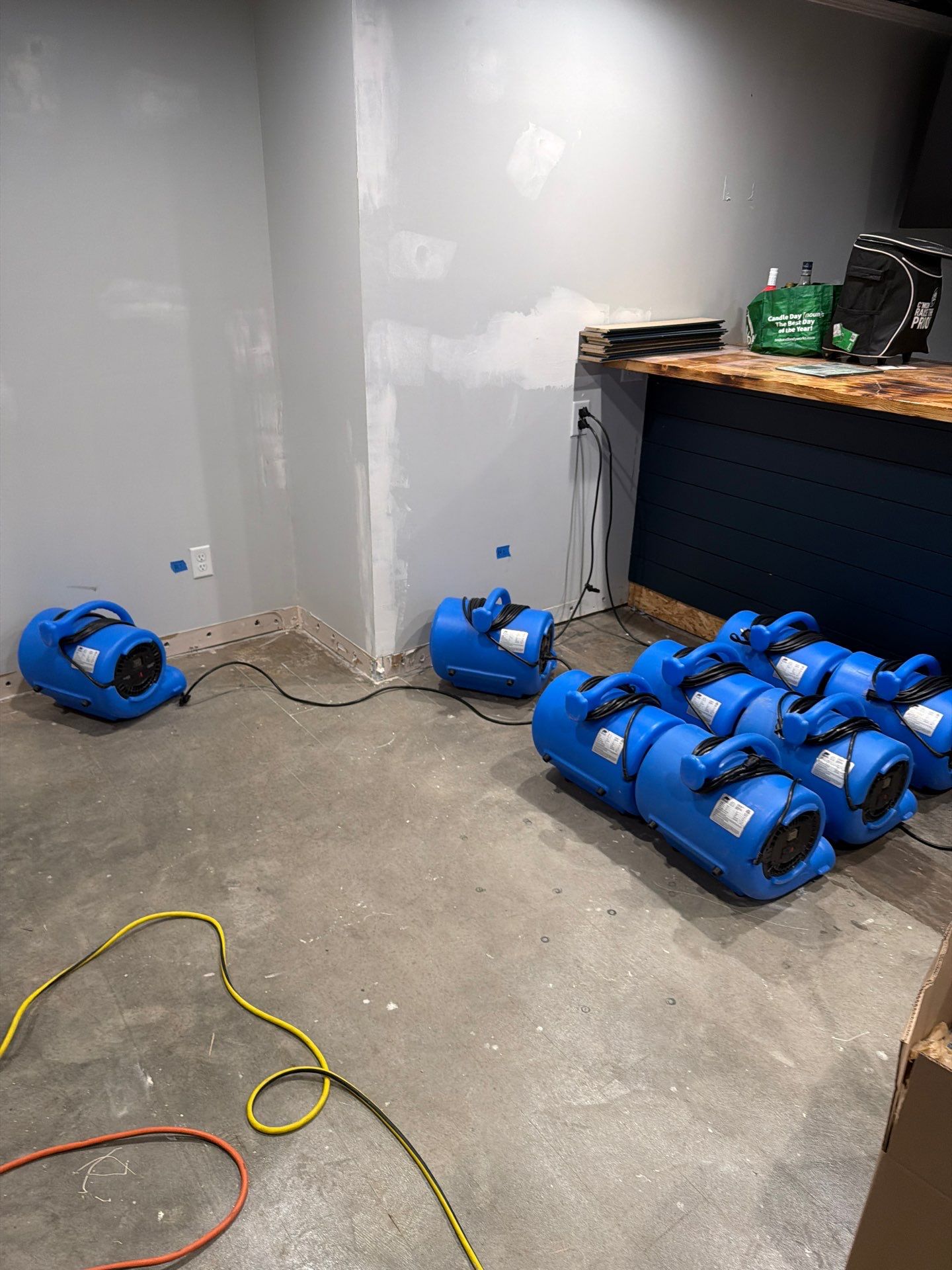
For a standard Category 1 water loss involving clean water from a supply line or appliance, expect three to five days of active drying. This assumes we arrive quickly, extract standing water, set up air movers and dehumidifiers, and the affected materials are responsive. Drywall, baseboards, and carpet pad usually reach dry standard within this window when conditions cooperate. Hardwood floors, plaster walls, and dense subfloor materials often need closer to seven days. We take daily moisture readings and only pull equipment when readings match the unaffected dry baseline in your home.
Why does drying take days instead of hours?
Water does not just sit on the surface. It wicks into porous materials like drywall, insulation, wood framing, and subflooring, where it hides from view but keeps releasing moisture into the air for days. Our job is to pull that bound water out faster than it would naturally evaporate, which is why we use commercial air movers paired with refrigerant or desiccant dehumidifiers. Even with the right equipment, physics sets the pace. Pushing materials to dry too fast can crack wood floors or warp trim, which is why IICRC S500 standards dictate balanced drying, not just maximum airflow.
There is also a difference between surface water and bound water. Surface water evaporates quickly with airflow alone. Bound water, the moisture trapped inside cell walls of wood or held within gypsum, releases slowly as the surrounding air gets drier. A dehumidifier has to keep pulling humidity out of the room so that the materials keep releasing what they hold. This back and forth between materials and air is what stretches the timeline into days rather than hours.
How do you know when drying is actually complete?
We do not rely on touch or appearance. Wet drywall can feel dry on the surface while still holding moisture inside. We use pin and pinless moisture meters calibrated to specific materials, and we establish a dry baseline from an unaffected area of your home before drying starts. When the affected materials match that baseline across multiple readings, we sign off and remove equipment. You receive a final moisture documentation report that shows the daily progression. This same documentation supports your insurance claim and gives you proof that the structure is dry before any reconstruction begins.
What factors make dry out take longer in my home?
Several things stretch the timeline. The water category matters first. Category 1 (clean) dries faster because materials can often be saved in place. Category 2 (grey) and Category 3 (black) water often require removing contaminated materials before drying can even begin, which adds a day or two upfront. Other factors include the volume of water, how long it sat before extraction, the type of flooring, whether insulation is wet, ambient humidity, and the season. A January burst pipe in a tightly sealed home dries differently than an August basement seep. Detailed information on contamination levels is available in our water damage category guide.
Home construction also plays a role. Older Rossville homes with plaster walls and solid wood subfloors retain moisture longer than newer builds with drywall and OSB. Multi story losses where water traveled down through ceilings often need extra time because the framing and insulation between floors stay wet long after the visible surfaces look fine. Finished basements with vapor barriers behind the drywall can trap moisture against the foundation, which sometimes forces us to remove a strip of drywall along the bottom of the wall to let the cavity breathe.
What happens during each day of the dry out?
Day one is extraction, demolition of unsalvageable materials, and equipment placement. We typically arrive within 2 hours of your call and start pulling water immediately. Day two is when you will hear the equipment running hard and see the highest dehumidifier output. We return to check moisture readings, reposition air movers, and empty or drain dehumidifier tanks. Days three through five are progress monitoring. Readings should drop steadily. When materials match the dry baseline for two consecutive readings, we pull equipment. If a pocket of moisture refuses to come down, we investigate further, which sometimes means opening a wall cavity or lifting a section of flooring.
What if drying takes longer than expected?
Sometimes we hit a stubborn area. Common reasons include water trapped behind a tile shower wall, saturated insulation inside an exterior wall, or a subfloor that holds moisture longer than the surface suggests. When this happens, we adjust the drying plan rather than just leaving equipment running. That might mean adding a focused injection drying system, removing a small section of drywall to access the cavity, or repositioning to target the slow spot. We explain every change before we make it, and we document the readings so your insurance adjuster can see why the extra day was necessary.
Will the equipment keep running overnight?
Yes. Air movers and dehumidifiers run continuously for the duration of the dry out, including nights and weekends. Stopping them resets the progress because materials begin to reabsorb moisture from the surrounding air the moment the equipment shuts off. The noise and the slight rise in your electric bill are real trade offs, but cutting the run time short almost always means a longer total project and a higher risk of mold. Rossville Water Restoration sizes the equipment to the affected area so we use the minimum needed to hit the dry standard, which keeps the disruption as short as possible.
Does the type of flooring change the dry out time?
Yes, significantly. Carpet and pad usually dry in two to three days once extracted and floated with air movers. Vinyl plank can trap moisture underneath and may need to be lifted in spots so the subfloor can dry. Engineered hardwood often takes five to seven days and sometimes cannot be saved if cupping is severe. Solid hardwood can sometimes be dried in place using specialty mat systems over seven to ten days. Tile with a cement board substrate dries faster than tile over wood subfloor. We assess each surface and tell you honestly whether drying in place is realistic or whether removal will save you money in the long run.
Can I speed up the process by opening windows or running fans?
In most Rossville climates, no. Opening windows often brings in humid outdoor air that slows drying. Household box fans move air but do not have the static pressure to dry behind baseboards or under cabinets. The right approach is controlled drying with sealed conditions, where dehumidifiers pull moisture out of the air and air movers push wet air off surfaces. If you are tempted to handle this yourself, our honest take on the limits of DIY is in this guide on drying your home yourself. For small spills under ten square feet, fans and a household dehumidifier may work. For anything larger, you risk hidden moisture and mold.